FilexHost vs Miget
Side-by-side comparison to help you choose the right AI tool.

Effortlessly host and share any file in seconds with FilexHost's simple drag-and-drop and secure sharing features.
Last updated: February 26, 2026

Miget
Deploy unlimited services on one flat-rate plan.
Visual Comparison
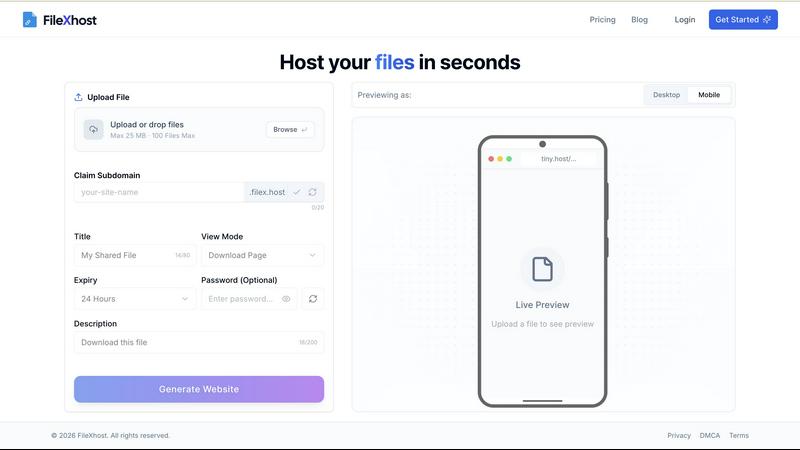
FilexHost
Miget

Overview
About FilexHost
FileXhost is your go-to solution for instant file hosting and sharing, designed to simplify the way you manage and distribute your digital content. Whether you are a professional sharing reports, a developer hosting projects, or a creative distributing digital products, FileXhost provides a seamless experience tailored for all your needs. With universal support for various file types—including documents, images, media, and even entire websites—FileXhost empowers users to share their content without the hassle of complicated setups or lengthy configurations. The "Drop & Share" workflow allows you to drag and drop your files, generating secure, instant URLs ready for sharing. It is not just about hosting; it is about enhancing the viewer experience, ensuring that your recipients see your files beautifully presented without unnecessary downloads or plugins. With robust security features and a commitment to high-speed delivery through a global CDN, FileXhost transforms how you share and host files, making your digital interactions smoother and more efficient.
About Miget
Miget – Stop paying per app. Start paying per compute.
Traditional PaaS platforms charge you for every app, database, and worker separately. Miget flips that model: pick a fixed compute plan, then deploy as many services as you want inside it.
- Unlimited apps, databases, and background workers per plan
- No per-service billing surprises
- Built on Kubernetes with full isolation between tenants
- Deploy from Git, GitHub, Registry with zero-config builds
- Managed PostgreSQL, Redis, and more
- Custom domains with automatic TLS
Whether you're running a single side project or a full production stack, you only pay for the compute you reserve—not the number of things you run on it.